About The Matrix Revolutions
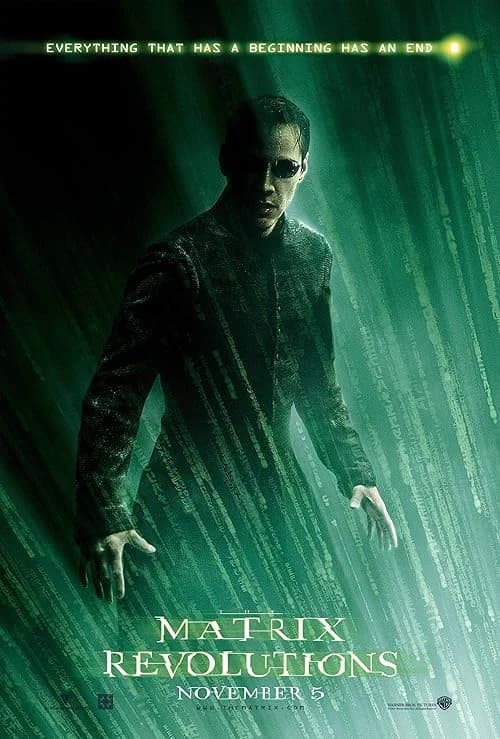
The Matrix Revolutions (2003) delivers the explosive conclusion to the groundbreaking sci-fi trilogy that redefined action cinema. As the human city of Zion faces annihilation from the relentless machine army, Neo embarks on a final, transcendent journey to confront the rogue Agent Smith while seeking to end the war between humanity and machines. Directors Lana and Lilly Wachowski craft a visually spectacular finale that balances massive-scale battle sequences with profound philosophical questions about choice, sacrifice, and reality.
Keanu Reeves delivers a compelling performance as Neo, embodying the character's evolution from reluctant hero to messianic figure with quiet intensity. Hugo Weaving's Agent Smith remains one of cinema's most memorable villains, his chaotic replication creating genuine tension throughout the film's runtime. The supporting cast, including Carrie-Anne Moss as Trinity and Laurence Fishburne as Morpheus, provide emotional weight to the epic narrative.
The film's technical achievements remain impressive, particularly the extended Zion defense sequence that showcases revolutionary visual effects and choreography. While some critics debated the philosophical resolution, The Matrix Revolutions successfully completes the trilogy's ambitious narrative arc with satisfying closure. For viewers who appreciate thought-provoking science fiction combined with groundbreaking action sequences, this film offers a must-watch conclusion to one of cinema's most influential franchises. The themes of human resilience, technological dependence, and the nature of consciousness remain remarkably relevant two decades later.
Keanu Reeves delivers a compelling performance as Neo, embodying the character's evolution from reluctant hero to messianic figure with quiet intensity. Hugo Weaving's Agent Smith remains one of cinema's most memorable villains, his chaotic replication creating genuine tension throughout the film's runtime. The supporting cast, including Carrie-Anne Moss as Trinity and Laurence Fishburne as Morpheus, provide emotional weight to the epic narrative.
The film's technical achievements remain impressive, particularly the extended Zion defense sequence that showcases revolutionary visual effects and choreography. While some critics debated the philosophical resolution, The Matrix Revolutions successfully completes the trilogy's ambitious narrative arc with satisfying closure. For viewers who appreciate thought-provoking science fiction combined with groundbreaking action sequences, this film offers a must-watch conclusion to one of cinema's most influential franchises. The themes of human resilience, technological dependence, and the nature of consciousness remain remarkably relevant two decades later.