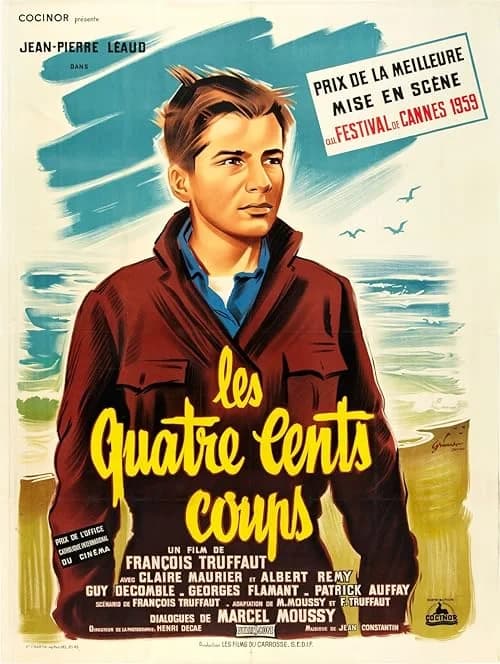
About The 400 Blows
François Truffaut's groundbreaking 1959 film 'The 400 Blows' remains a cornerstone of French New Wave cinema and a profoundly moving coming-of-age story. The film follows 12-year-old Antoine Doinel (brilliantly portrayed by Jean-Pierre Léaud), a Parisian boy neglected by his self-absorbed parents and misunderstood by the rigid educational system. As Antoine seeks escape from his unhappy home and school life, he drifts into minor delinquencies—playing hooky, stealing a typewriter, telling small lies—that gradually escalate, leading him toward institutional systems ill-equipped to address his emotional needs.
Truffaut's direction is remarkably intimate and observational, using Paris not as a romantic backdrop but as a realistic environment shaping Antoine's consciousness. The film's semi-autobiographical elements lend it authentic poignancy, while its innovative techniques—location shooting, natural lighting, and fluid camera work—defined the French New Wave aesthetic. Léaud's performance is astonishingly naturalistic, capturing adolescent confusion and yearning with heartbreaking sincerity.
Viewers should watch 'The 400 Blows' not only for its historical importance but for its timeless exploration of childhood alienation. The film's emotional power culminates in one of cinema's most iconic final shots—a moment of ambiguous freedom that continues to resonate deeply. This masterpiece demonstrates how cinema can capture the delicate, often painful transition into awareness with unparalleled honesty and artistry.
Truffaut's direction is remarkably intimate and observational, using Paris not as a romantic backdrop but as a realistic environment shaping Antoine's consciousness. The film's semi-autobiographical elements lend it authentic poignancy, while its innovative techniques—location shooting, natural lighting, and fluid camera work—defined the French New Wave aesthetic. Léaud's performance is astonishingly naturalistic, capturing adolescent confusion and yearning with heartbreaking sincerity.
Viewers should watch 'The 400 Blows' not only for its historical importance but for its timeless exploration of childhood alienation. The film's emotional power culminates in one of cinema's most iconic final shots—a moment of ambiguous freedom that continues to resonate deeply. This masterpiece demonstrates how cinema can capture the delicate, often painful transition into awareness with unparalleled honesty and artistry.